

By Maya Ellison ·
How to Choose the Best Dermaplane Razor: A Buyer's Guide
Instead of a fake roundup of ten near-identical products, this guide does something more useful. It walks through the five things that actually separate a good dermaplane razor from a frustrating one, so you can judge any tool on the shelf, including ours, on its merits. I have tested dozens of facial razors, and these are the criteria that consistently predict a clean, comfortable pass.
1. The blade
Everything starts with the blade. You want stainless steel, sharp enough to catch fine vellus hair on the first pass without needing pressure. A dull blade is the number one cause of dragging, tugging and irritation, because it forces you to press harder and go over the same spot repeatedly. A quality single blade skims the surface, lifting peach fuzz and dead cells cleanly. When you shop, look for a fresh, well-finished edge rather than the cheapest possible metal.
2. The safety guard
A built-in safety guard is what makes at-home dermaplaning approachable for beginners. It sits over the blade and limits how much of the edge contacts your skin, which sharply reduces the chance of nicks while you learn the 45-degree angle. Razors without any guard demand a steadier, more experienced hand. If you are new, treat the safety guard as non-negotiable. The technique that pairs with it is covered in how to use a dermaplane razor.
3. The handle
An ergonomic handle sounds like a minor detail until you are working around your nose and upper lip. You want a grip that stays secure in slightly damp fingers and gives you fine control for short, precise strokes. A handle that is too slick or too thin makes it harder to hold the consistent angle that a clean pass depends on. Comfortable control also matters when you switch to detail work, like using the same tool as an eyebrow razor to tidy the brow line.
4. Reusable vs single-use
Some facial razors are meant to be tossed after a couple of uses. A reusable razor you can clean and store, then replace on your own schedule, is friendlier on both your routine and your budget. Reusability also encourages good hygiene, since you are caring for a tool rather than treating it as disposable. Whatever you choose, keep the blade clean and dry between sessions and swap it out once it starts to feel less sharp.
5. Multipack value
Blades wear with use, and it is smart to keep a fresh one on hand rather than stretching a dull edge. This is why a multipack usually wins on value. You get several razors for a lower per-unit cost, you always have a backup, and you can keep one for face and one reserved for brows. An assorted multipack also makes it easy to keep a razor in more than one place, like your bathroom and your travel bag.
Red flags to avoid
Just as useful as knowing what to look for is knowing what to walk away from. A blade that tugs or drags on the first pass is a sign of poor steel or a dull edge, and no technique fixes that. A razor with no safety guard is harder for beginners and raises the risk of nicks. A slick, flimsy handle undermines the steady control a clean pass needs. And be skeptical of any product that promises far more than surface grooming or lasting, hands-free results. A facial razor gently lifts fuzz and dead skin, nothing more, and honest brands describe it exactly that way. If the marketing sounds too good to be true, it is.
The buyer's scorecard
Here is the checklist I use, distilled into a table you can carry into any purchase decision.
| Criterion | What good looks like | Why it matters |
|---|---|---|
| Blade | Sharp stainless steel | Clean pass without pressure |
| Safety guard | Built-in, beginner-friendly | Fewer nicks while learning |
| Handle | Grippy and ergonomic | Steady 45° control |
| Reusable | Cleanable, replaceable | Better hygiene and value |
| Multipack | Several per set | Fresh blades, lower per-unit cost |
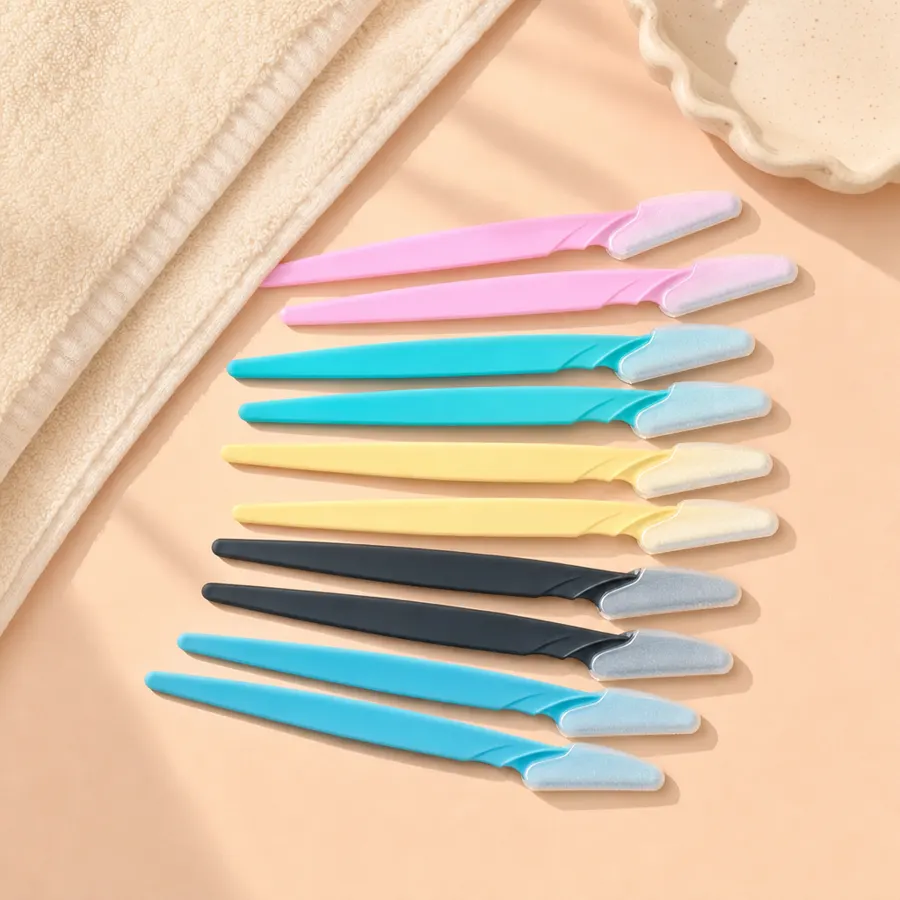
The Peachly dermaplane razor set was designed around this exact list: a stainless blade with a safety guard, an ergonomic handle, a reusable body and an assorted multipack. That is not a coincidence. These are the features that make the tool pleasant to use week after week, and they are the same ones I would tell a friend to look for on any brand.
Manual or electric?
One last fork in the road. Manual razors give you the most control over pressure and angle, which most people prefer for the face. An electric dermaplane tool trades some of that control for speed and a hands-off, motorized pass, which suits people who want to move quickly. Neither is objectively better. It comes down to whether you value control or convenience. For the differences in technique and use, dermaplane vs shaving is a helpful companion read.
Choosing well is really about buying once and buying right. Score any razor against the five criteria above, prioritize the blade and the safety guard, and lean toward a reusable multipack for value. Do that and you will skip the frustration of a dull, guardless tool. For the full routine once yours arrives, see how to dermaplane at home, check is dermaplaning safe if your skin is sensitive, and read what buyers say on the reviews page. It is a natural pick as a facial razor for women who want fuzz removal and brow detailing from one kit.
Maya Ellison · Beauty writer & at-home dermaplaning enthusiast
Maya has tested dozens of facial razors and writes practical, honest at-home skincare guides. She is not a dermatologist, so for any medical skin concern she points readers to a professional.